
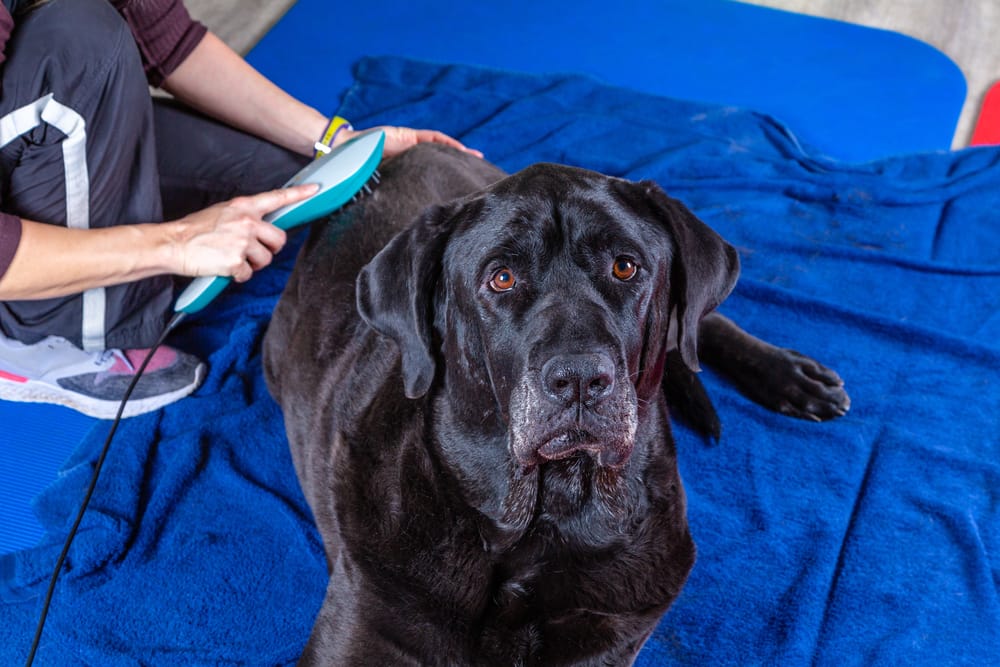
Choosing the right dog hip dysplasia treatment matters when chronic joint pain limits your pet’s mobility. This inherited condition affects thousands of medium and large breed dogs each year. Progressive joint deterioration reduces quality of life over time.
Traditional pain medications provide relief but carry risks with long-term use. Laser therapy offers a drug-free alternative that targets pain at the cellular level. This approach works without the side effects that complicate ongoing pharmaceutical care.
Key Takeaways
- Hip dysplasia causes progressive joint instability that leads to osteoarthritis and chronic pain.
- Low-level laser therapy stimulates cellular repair and endorphin release while improving blood flow.
- Laser therapy protocols help dogs unable to tolerate NSAIDs due to organ sensitivity.
- Professional evaluation determines whether your dog qualifies for laser therapy.
- Common questions cover safety, timelines, and how laser therapy works with medications.
Understanding Hip Dysplasia Progression and Multimodal Management
According to Cornell University College of Veterinary Medicine, hip dysplasia is a common inherited orthopedic condition. It develops when the hip socket forms abnormally during puppy growth. The femoral head fails to sit properly in the acetabulum.
Per the Merck Veterinary Manual, this creates joint laxity and subsequent degenerative joint disease that worsens with time. This mechanical instability triggers a cascade of problems affecting your dog’s musculoskeletal system.
How the Joint Deteriorates
The loose joint allows excessive bone movement. Each step creates micro-trauma to cartilage that should glide smoothly. Over months, repeated damage breaks down protective layers and exposes bone. Secondary osteoarthritis develops as bone spurs form.
Pain increases as inflammation spreads through the joint. Dogs favor the affected leg and shift weight elsewhere. Many develop elbow or knee problems from altered gait patterns. Early intervention matters for preserving long-term mobility.
Weight and Activity Management
Weight management forms the cornerstone of care. Excess pounds significantly increase forces on damaged joints. Even modest weight loss provides measurable pain relief. Maintaining ideal body weight can delay surgical needs by years.
Activity modification preserves strength without worsening damage. Short, frequent walks on level surfaces work well. Swimming provides ideal exercise because water supports body weight. The buoyancy eliminates impact on inflamed tissues.
Physical Therapy and Supplements
Physical therapy maintains flexibility around compromised joints. Range-of-motion exercises prevent stiffening from inactivity. Controlled movements help pump inflammatory fluids from joint spaces. Passive stretching by trained professionals preserves mobility in advanced cases.
Joint supplements with chondroitin sulfate offer support for cartilage repair. Results vary, but starting early helps most dogs. Glucosamine often accompanies chondroitin in combination formulas.
Medication and Surgical Options
NSAIDs reduce inflammation and allow dogs to stay active. Long-term use requires regular blood tests for liver and kidney monitoring. Some dogs develop gastrointestinal sensitivity that limits these medications.
Surgical options become necessary when conservative care fails. Femoral head ostectomy removes the damaged ball of the hip. Total hip replacement offers the most complete solution. Arthroscopic surgery helps in early cases by smoothing damaged surfaces.
Home Environment Adjustments
Environmental changes reduce daily joint stress at home. Non-slip rugs, ramps, and orthopedic beds protect painful joints. Raised food bowls reduce painful bending during meals.
How Photobiomodulation Works at the Cellular Level
Low-level laser therapy delivers specific light wavelengths to damaged tissues without heat or discomfort. Research published in Veterinary Medicine and Science confirms it can increase physical activity in dogs dealing with joint disease. This process triggers biological responses that support your dog’s natural healing.
Light Penetration and Wavelengths
Deep-penetrating light reaches several centimeters below the skin. Non-thermal photons of light pass through muscle layers to reach hip joints. Red and near-infrared wavelengths between 630 and 850 nanometers work best for musculoskeletal conditions.
Cellular and Circulatory Effects
Cellular mitochondria absorb the light and convert it into increased ATP. This enhanced metabolism speeds up repair of damaged tissue. Cell regeneration accelerates in treated areas, aiding recovery from chronic inflammation.
Blood flow increases dramatically during treatment sessions. Better circulation delivers oxygen and nutrients for tissue repair. It also removes waste products that fuel ongoing inflammation. This breaks the chronic pain cycle in arthritic joints.
Pain Relief and Safety Profile
The treatment triggers endorphin release from your dog’s nervous system. These natural pain-relieving hormones work without pharmaceutical side effects. Many dogs experience relief lasting several days after each session.
Unlike oral medications, laser therapy targets specific areas. This precision eliminates liver, kidney, or stomach concerns. Dogs with organ sensitivity get pain relief without added risks.
Clinical Evidence
A study in the American Journal of Veterinary Research evaluated photobiomodulation therapy in dogs with hip osteoarthritis. Results showed improvements in joint range of motion and pain scores. Combined laser and hydrotherapy protocols show particularly strong results. Gait analysis reveals better weight-bearing in treated dogs.
What to Expect During Sessions
Sessions need no sedation beyond gentle positioning. Most dogs relax during the process. The non-invasive nature allows frequent sessions without recovery time.
Integrating Laser Therapy into Comprehensive Treatment Plans
Treatment protocols depend on your dog’s specific condition, age, and overall health. Veterinarians tailor laser therapy frequency and duration for each patient. Dogs that cannot tolerate long-term NSAIDs benefit most from this drug-free pain management alternative.
Post-surgical recovery responds well to laser therapy. Enhanced cellular repair reduces healing time after procedures like total hip replacement. Improved blood flow cuts post-operative inflammation.
Rehabilitation programs pair naturally with laser treatments. Reduced pain helps patients participate in physical therapy exercises. The combination produces stronger outcomes than either treatment alone.
Joint supplements, hyaluronic acid, and platelet-rich plasma therapy all work alongside laser treatments. Environmental modification stays important regardless of treatment choice. This multimodal approach addresses different aspects of the disease.
Session frequency starts higher during acute pain phases. Most patients begin with twice-weekly treatments. Gradual spacing to monthly appointments follows individual response patterns.
Professional evaluation remains essential for building the right protocol. Joint damage severity, concurrent conditions, and patient tolerance all shape the plan. The veterinary team monitors progress and adjusts as needed.
Cost considerations favor laser therapy for long-term management. Fewer monitoring visits mean lower costs. Many pet insurance plans cover prescribed laser sessions.
Treatment response varies among patients. Some improve within days while others need several weeks. Regular evaluations optimize protocols based on individual needs.
Pain Management Alternatives for Medication-Sensitive Dogs
Many dogs develop sensitivity to traditional pain medications over time. Liver dysfunction, kidney disease, and stomach issues can make NSAIDs dangerous. Laser therapy provides safe relief without stressing vital organs.
Senior dogs face multiple health challenges that complicate medication choices. Age-related organ decline makes many pharmaceuticals risky. This drug-free approach works well even for fragile patients with multiple conditions.
Dogs with degenerative joint disease need management for years. Long-term medication raises organ damage risks over time. Laser therapy delivers sustained relief without cumulative toxicity concerns.
Combination approaches often produce stronger outcomes. Laser therapy can lower medication doses while maintaining pain control. Many dogs achieve better comfort with reduced pharmaceutical dependence.
The regenerative aspect sets this therapy apart. Enhanced circulation and cellular repair address underlying joint damage. This supports actual tissue healing alongside symptom relief.
Supporting Recovery After Hip Surgery
Post-surgical healing demands careful inflammation management. Laser therapy speeds cellular repair while reducing swelling and pain. The treatment supports natural recovery without disrupting surgical repairs.
Incisions heal faster with improved circulation to surrounding tissues. Better blood flow delivers nutrients for repair and removes waste. This environment reduces infection risk and limits scar tissue formation.
Laser therapy cuts reliance on opioid pain medications after surgery. Drug-free relief keeps dogs alert during recovery. Earlier mobilization prevents muscle loss and joint stiffness.
Physical therapy becomes more tolerable when pain decreases. Dogs participate more actively in rehabilitation exercises. Better exercise tolerance leads to faster strength recovery.
Bone healing benefits from enhanced mineral and growth factor delivery. Veterinarians can apply this non-invasive treatment over surgical sites once initial healing starts.
Long-term Management Strategies
Chronic osteoarthritis requires lifelong care that adapts over time. Laser therapy frequency adjusts with disease progression. Treatment increases during flare-ups and decreases during stable periods.
Regular sessions may slow disease advancement. Early intervention produces better outcomes than waiting until symptoms are severe.
Dogs with less pain show more interest in play and exercise. Improved mobility supports mental health and social bonding. These quality-of-life benefits keep owners committed to consistent treatment.
Seasonal symptom changes respond well to adjusted schedules. Cold, damp weather often worsens joint pain. Laser therapy intensity can match these natural fluctuations.
Why Laser Therapy Belongs in Your Dog Hip Dysplasia Treatment Plan
Dog hip dysplasia treatment works best when it combines multiple approaches tailored to your pet’s specific needs. Laser therapy stands out as a drug-free option that relieves pain while supporting natural healing. It avoids the organ sensitivity concerns that limit long-term medication use.
This approach integrates smoothly with other therapies for a well-rounded management plan. Whether your dog needs post-surgical support or a safer NSAID alternative, laser therapy fills an important role.
Contact Barrington Oaks Veterinary Hospital to explore laser therapy options today.
FAQs
What are the first signs of hip dysplasia in dogs?
Early signs include difficulty rising from rest, a swaying or “bunny-hopping” gait, reluctance to climb stairs or jump, and decreased activity. You may also notice your dog favoring their back legs or showing stiffness after exercise. Symptoms often appear between six months and two years of age.
How to help a dog with hip dysplasia
Supporting a dog with hip dysplasia involves a combination of approaches. Maintain a healthy weight to reduce joint stress, provide low-impact exercise like swimming, use orthopedic bedding, and add ramps to avoid stair climbing. Work with your veterinarian to build a pain management plan that fits your dog’s specific needs.
Is laser therapy safe for dogs with severe hip dysplasia?
Yes, low-level laser therapy is safe for dogs with severe joint damage. The treatment produces no heat damage and requires no sedation or anesthesia. Our trained veterinary professionals perform each session using precise protocols. Most dogs tolerate it well, and many actually relax during the process.
How to prevent hip dysplasia in dogs
Prevention focuses on responsible breeding and early management. Avoid overfeeding large breed puppies, since rapid growth worsens joint development. Feed breed-appropriate diets, maintain a lean body weight throughout life, and screen predisposed breeds early via PennHIP. Dogs with a family history of hip dysplasia should not be bred.
Can hip dysplasia be cured in dogs?
Hip dysplasia has no complete cure, but most dogs manage well with proper care. Conservative treatment controls pain and preserves mobility in many cases. Surgical options like total hip replacement can restore near-normal function in severe cases. Early diagnosis and consistent management give dogs the best long-term quality of life.
Sources
- https://www.merckvetmanual.com/musculoskeletal-system/arthropathies-and-related-disorders-in-small-animals/hip-dysplasia-in-dogs
- https://onlinelibrary.wiley.com/doi/abs/10.1002/vms3.997
- https://www.vet.cornell.edu/departments-centers-and-institutes/riney-canine-health-center/canine-health-topics/canine-hip-dysplasia-chd
- https://avmajournals.avma.org/view/journals/ajvr/83/8/ajvr.22.03.0036.xml
