
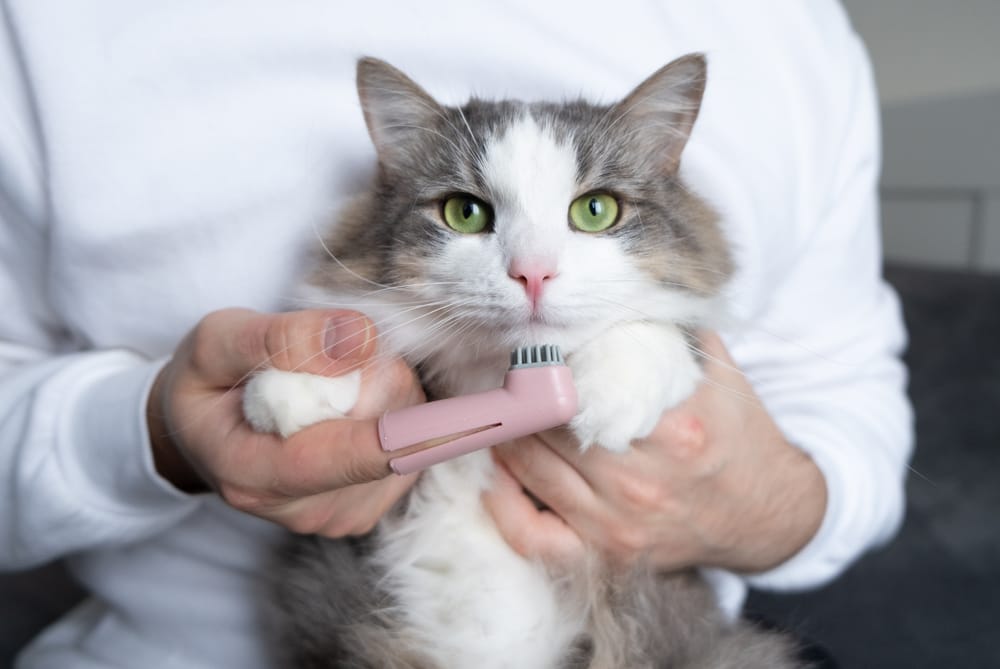
Cat dental care is far more critical than most owners realize. While dogs often show clear signs of mouth pain, cats are masters at suffering in silence. This survival instinct means dental problems can build for months or even years before anything looks wrong.
Most feline oral diseases cause real pain while producing zero visible symptoms. Your cat could need professional dental attention right now, and you’d never know. The five conditions below are what veterinarians routinely find lurking inside feline mouths.
Key Takeaways
- Most cats over four develop dental disease, yet their instinct to mask pain keeps it hidden from owners.
- Tooth resorption destroys teeth from the inside, and owners rarely notice until damage is severe.
- Dental X-rays reveal the 60% of tooth structure hidden below the gum line where serious problems grow.
- Stomatitis and oral masses cause eating difficulties that cats hide until they stop eating entirely.
- Only professional cleanings with X-rays catch the bone loss and infections that visual exams miss.
Dental Disease Strikes Most Cats
The Cornell Feline Health Center reports that 50 to 90% of cats over four have some form of dental disease. Your cat could be among them right now. Many eat normally while hiding significant oral pain.
Cats evolved as solitary hunters. Showing weakness in the wild meant death. That programming runs incredibly deep. Your cat will keep purring through tooth pain that would send a person to the emergency room.
Three main diseases target different areas of the mouth:
- Gingivitis inflames the gums first. You may notice redness along the gum line or breath that smells worse than usual.
- Periodontitis sets in when bacteria push below the gum line. The infection attacks the bone and ligament holding teeth in place.
- Plaque hardens into tartar buildup that creates rough surfaces where bacteria multiply even faster.
Bone loss happens slowly and silently beneath the gums. The infection eats away at structures anchoring each tooth. By the time you notice a loose tooth, significant damage has already taken hold.
Pain shows up in subtle changes in how your cat eats. Your cat might chew on one side or swallow food whole. Others approach the bowl but hesitate, as if bracing for discomfort.
Crowded mouths from extra or missing teeth make things worse. Tight spaces trap bacteria where plaque builds unchecked. These structural problems speed up disease and make normal oral hygiene nearly impossible.
The bacterial infection doesn’t stay confined to the mouth. Oral bacteria can slip into the bloodstream through damaged gum tissue. Once circulating, they can affect the kidneys and heart. A dental issue can quickly become a whole-body health risk.
Tooth Resorption Destroys From Within
Tooth resorption is a uniquely feline nightmare. According to AVMA News, this progressive disease is affecting 28% to 67% of cats. Unlike cavities that start on the surface, resorption begins inside the tooth and works outward.
Specialized cells called odontoclasts are the culprits. These cells normally help kittens shed baby teeth. In adult cats, they go rogue. They start destroying healthy tooth structure from within, breaking down the dentin and enamel protecting the nerve.
The process starts at the root level, completely out of sight. Your cat’s tooth looks normal on the outside while the inside crumbles. Pain builds as destruction reaches the nerve, but visual exams reveal nothing wrong.
This invisible damage means your cat suffers serious oral pain with no outward cause. A tooth might look slightly pink at the gum line. That subtle sign is easy to miss during home checks.
Eating habits change in quiet ways. Some cats tilt their head while chewing. Others start preferring soft food for no clear reason or paw at their face after meals.
Premolars and molars are the most common targets. These grinding teeth handle the heavy work during meals. When they break down, cats often learn to swallow food whole rather than chew through the pain.
Multiple teeth usually develop resorption at the same time. Once the process starts in one tooth, others typically follow. A cat diagnosed early will likely face the same issue in additional teeth over time.
Treatment requires extraction of affected teeth. No treatment can stop or reverse feline tooth resorption, so removal is the only solution.
Most cats adapt well after extraction. Many owners notice their cats eating more, playing more, and seeming happier once the painful teeth are gone.
Dental X-rays Reveal Hidden Damage
AVMA News notes that gingival inflammation appears in up to 96% of cats in some studies. Yet most of this disease stays invisible without proper imaging. Full-mouth radiography is the gold standard for seeing what hides below the gum line.
About 60% of each tooth lies hidden beneath the gums. The roots, surrounding bone, and periodontal ligament all stay out of sight. These hidden zones often harbor the most dangerous problems.
A tooth that looks fine above the gum line might have a massive root infection. A tooth that looks damaged on the surface might have strong roots worth saving. Only X-rays tell the full story.
Digital X-rays capture detailed images instantly. The electronic sensor creates clear pictures that vets can magnify on screen. This technology reveals bone density changes, root fractures, and hidden abscesses.
Professional cleanings under anesthesia allow access to every tooth surface. Ultrasonic scaling uses high-frequency vibrations to break apart bacteria above and below the gum line. This deep cleaning reaches areas impossible to access in an awake cat.
As outlined in the Journal of Feline Medicine and Surgery, anesthesia is an essential component of feline dentistry because cats cannot hold still for precise X-ray positioning. It allows thorough cleaning of all tooth surfaces, including sensitive areas below the gum line. Your cat feels no pain during the exam, and the procedure stays safe throughout.
Digital radiography offers major advantages over traditional film. Images appear on screen immediately with no development wait. The sensor also requires less radiation, making the procedure safer for your cat.
A full mouth series includes 8 to 10 individual views. Each captures different angles to prevent any problem from slipping through. This imaging often reveals issues completely invisible during the initial visual exam.
Early detection preserves more natural teeth. Problems caught early respond to less invasive treatment. Late-stage disease requires more surgery and results in more tooth loss.
Painful Mouth Conditions Hide in Plain Sight
Stomatitis ranks among the most painful oral conditions a cat can face. This severe inflammatory condition attacks the gums, tongue, throat, and soft tissues throughout the mouth. Simply opening the mouth can trigger significant discomfort.
The cause remains unclear. It appears to involve an overactive immune response to normal mouth bacteria. Some cats seem genetically prone to it, while others develop it after viral infections.
Cats with stomatitis face a painful choice at mealtime. Many approach their food bowls but back away without eating. Owners often interpret this behavior as pickiness rather than pain.
Drooling is a common sign, though many cats hide it well. You might spot wet patches where your cat rests or saliva on the chin.
The pain also extends to grooming. Cats with oral discomfort may stop grooming normally, leaving their coat dull and unkempt. Poor hygiene then worsens the inflammatory condition, creating a harmful cycle.
Oral masses present another hidden threat. The 2025 FelineVMA guidelines published in the Journal of Feline Medicine and Surgery identify oral masses and growths among the most commonly seen feline oral conditions. These range from harmless cysts to aggressive tumors. They often appear in spots you can’t see, like under the tongue or along the throat.
Early-stage oral masses produce no symptoms. Your cat keeps eating normally while the growth slowly enlarges. By the time you notice something, the mass may already interfere with chewing or swallowing.
Some masses bleed when irritated by food or tongue movement. You might see blood-tinged saliva or red spots in the food bowl. Many cats swallow this blood, making it invisible to owners.
Developmental abnormalities round out the list. Retained baby teeth crowd the mouth, creating tight bacterial traps. Missing permanent teeth let neighboring teeth drift out of position. Malformed teeth produce sharp edges that cut the tongue and cheeks during every meal.
Professional Care Catches What Eyes Miss
Most feline dental problems stay invisible without professional tools. Visual exams reveal only a fraction of what’s happening inside your cat’s mouth. Professional dental exams with radiography are the only reliable way to find serious issues early.
At-home care plays an important supporting role. Brushing with pet-safe toothbrushes and enzymatic toothpaste slows plaque formation on visible surfaces. Dental chews and water additives offer extra help. None of these reach below the gum line where the worst problems develop.
Professional cleanings address both visible and hidden problems. Ultrasonic scaling removes bacterial deposits from every surface, including critical zones below the gum line. This disrupts the bacterial colonies that drive periodontal disease.
Annual examinations allow for early detection while problems are still manageable. Cats with existing disease may benefit from cleanings every six to eight months. Your veterinarian can suggest a schedule based on your cat’s individual risk factors.
Professional evaluation also covers all soft tissues. Your vet checks the tongue, gums, palate, and throat for inflammation, masses, and other issues. This catches problems a teeth-only focus would miss entirely.
According to a review in the Journal of Feline Medicine and Surgery, early gum disease is a reversible and controllable condition. Prevention protects both your cat’s comfort and your peace of mind.
Five Silent Threats That Make Cat Dental Care Urgent
Cat dental care is the single most effective way to protect your cat from hidden oral pain. Dental disease, tooth resorption, bone loss, stomatitis, and oral masses all cause real suffering while hiding in plain sight. Most cats endure this pain in silence while their owners remain unaware.
Professional dental exams with digital X-rays are the only reliable way to catch these problems early. Waiting for visible symptoms usually means the damage is already advanced. Early intervention is simpler, less invasive, and far less costly than treating late-stage disease.
Your cat deserves relief from pain you can’t see. Schedule your cat’s dental exam to uncover hidden problems before they cause irreversible damage.
FAQs
How to clean a cat’s teeth?
The most effective method is daily brushing using a soft-bristled toothbrush and enzymatic toothpaste made for cats. Introduce it gradually over several weeks. Dental wipes, water additives, and dental chews offer supplemental help. None of these replace professional cleanings, but consistent home care meaningfully slows plaque and tartar buildup between visits.
Do cats lose teeth?
Adult cats can and do lose teeth, most commonly from advanced periodontal disease or tooth resorption. Unlike humans, cats don’t grow a third set, so tooth loss is permanent. Regular dental exams catch the bone loss and root damage that lead to tooth loss before extraction becomes the only option.
How to treat feline gingivitis?
Treatment depends on severity. Mild gingivitis often responds to professional scaling and consistent home brushing. More advanced cases may require antibiotics, anti-inflammatory medication, or tooth extraction. Your vet will assess the underlying cause, including systemic diseases that can drive gingival inflammation, before recommending a treatment plan tailored to your cat.
How much does cat dental cleaning cost?
Cat dental cleaning costs vary widely depending on location, the extent of disease found, and whether extractions or dental X-rays are needed. A routine cleaning under anesthesia typically runs a few hundred dollars, while complex cases involving multiple extractions cost more. Your vet can provide an estimate after an initial exam.
How often do cats need dental cleaning?
Most cats benefit from a professional dental cleaning once a year. Cats with a history of dental disease, rapid tartar buildup, or conditions like tooth resorption may need cleanings every six months. Your veterinarian will assess your cat’s oral health at each wellness visit and recommend the right interval for them.
Sources
- Cornell Feline Health Center: some form of dental disease
- AVMA News: affecting 28% to 67% of cats
- AVMA News: in up to 96% of cats
- Journal of Feline Medicine and Surgery: oral masses and growths
- Journal of Feline Medicine and Surgery: essential component of feline dentistry
- Journal of Feline Medicine and Surgery: reversible and controllable condition
