
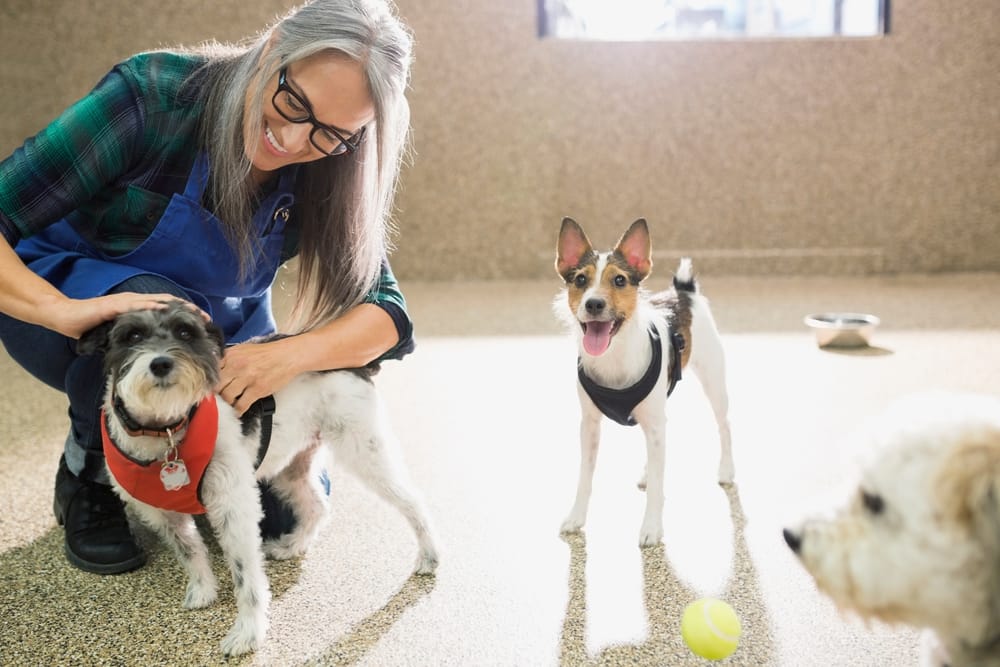
Dog daycare creates real, lasting improvements in canine social skills and behavior. Dogs who attend quality facilities develop stronger communication, reduced anxiety, and better impulse control. These changes happen through daily interaction with other dogs under professional supervision.
Structured play sessions, mental challenges, and positive social exposure all work together to build confidence. These programs also reduce problem behaviors at home, from destructive chewing to excessive barking.
Young puppies and adult dogs alike benefit from professional daycare. It provides the consistent socialization structure dogs need to thrive. Here’s how it works and what the research says about long-term behavioral outcomes.
Key Takeaways
- Puppy socialization between 3-14 weeks in daycare settings prevents lifelong fear-based behaviors and builds social confidence.
- Daily structured play teaches dogs appropriate boundaries while providing mental stimulation that eliminates destructive home behaviors.
- Trained daycare staff recognize stress signals and manage group dynamics to ensure positive learning experiences.
- Regular daycare attendance creates measurable behavioral improvements that strengthen the human-dog bond.
- Pet parents have specific questions about daycare timing, frequency, and suitability for different dog personalities.
Puppy Socialization and Early Development Benefits
The UC Davis School of Veterinary Medicine identifies a critical social development period between 3 and 14 weeks. This window shapes how your dog interacts with other dogs for life. Puppies who miss it often develop fear-based reactions, excessive barking, and difficulty reading canine body language. Professional programs provide controlled exposure during this vital developmental stage.
A study published on PubMed Central confirms that dogs without proper early socialization can develop undesirable aggression and fearfulness. A puppy who never learns a play bow means “let’s have fun” may read this gesture as a threat. These misunderstandings create reactive behaviors that grow harder to correct over time.
Experts at Purdue University’s Canine Welfare Science program call early socialization the single most effective way to prevent fear and behavior problems in dogs. Quality facilities create positive first encounters with other dogs. Puppies learn that meeting new playmates leads to fun rather than scary experiences. This foundation builds social flexibility that serves them throughout their lives.
Diverse group settings expose puppies to different sizes, energy levels, and play styles. A small puppy learns to communicate with larger dogs. Energetic breeds discover how to moderate their enthusiasm around calmer companions. This variety builds adaptability that prevents behavioral issues later.
Staff monitor every interaction closely and step in before negative experiences occur. This guidance helps puppies develop healthy responses to unfamiliar dogs and situations. Every social encounter builds confidence rather than fear.
Puppies can begin around 12 to 16 weeks after completing their initial vaccination series. Starting during the critical socialization window provides the greatest behavioral benefits. Early, positive group exposure helps prevent fear-based reactions from developing.
Early group exposure also prevents resource guarding. Puppies learn to share space, toys, and attention from caregivers. They start associating other dogs with positive outcomes instead of competition.
Environmental enrichment introduces different surfaces, sounds, and spatial layouts. Puppies who experience varied environments during their socialization window grow into more adaptable, confident adults.
Dogs who attend during their early months show measurably better social skills as adults. They greet other dogs with appropriate body language and recover quickly from minor conflicts. These skills make them more enjoyable companions for the whole family.
Behavioral Improvements Through Structured Play
The ASPCA stresses that physical and mental stimulation is a vital part of addressing behavioral issues, including anxiety. Daily exercise and enrichment in a group setting eliminate many common problems at home. Dogs who spend energy in appropriate play stop destroying furniture, barking excessively, and seeking attention in disruptive ways.
Structured activities teach impulse control that transfers directly to home life. Dogs learn to wait their turn for toys and calm down after high-energy sessions. This self-regulation reduces hyperactivity during family activities.
Puzzle toys and enrichment activities challenge dogs mentally in ways that prevent boredom. A dog who solves food puzzles and explores new environments arrives home satisfied. They seek far less stimulation through inappropriate chewing or digging.
Group play teaches dogs to read social cues in real time. They learn when a playmate needs space and when to dial back energy. They also figure out how to invite shy dogs into activities. These skills carry over to family outings and neighborhood encounters.
Positive reinforcement from trained staff helps dogs connect good behavior with rewards. Calm greetings, gentle play, and following directions all lead to praise and treats. This approach builds confidence and encourages dogs to repeat those behaviors at home.
Natural energy release through play prevents many stress-related behaviors. Dogs who run, play, and socialize during the day sleep better at night. They show less anxiety when left alone and fewer compulsive habits like excessive licking or pacing.
Rest periods built into daily schedules teach emotional regulation. Dogs learn to settle after excitement on their own. This skill helps them handle visitors, car rides, and other stimulating situations with less reactivity.
Training exercises during play sessions help dogs practice obedience in distracting environments. Stronger responsiveness at the facility translates to better behavior at home and in public settings. This reliability strengthens the bond between dogs and their families.
Consistent rules and predictable routines within the structured environment reduce anxiety. Dogs focus on learning appropriate social behaviors instead of worrying about what comes next.
Professional Supervision and Safety Protocols
Trained staff prevent negative social encounters that could create lasting behavioral setbacks. The American Veterinary Medical Association notes that positive experiences can help prevent fearful or aggressive responses in dogs at any age. Staff recognize early signs of stress, fatigue, or overstimulation before they escalate.
Temperament evaluations match dogs with compatible playmates. Staff assess each dog’s energy level, play style, and social preferences to create balanced groups. This careful matching prevents overwhelming experiences that could set back social development.
Dogs with specific challenges receive individualized support. The assessment process includes behavioral history reviews and current skill evaluations. This targeted approach helps even shy or reactive dogs build positive associations with group settings.
Professional facilities maintain strict protocols for group management and conflict prevention. These safety standards allow dogs to focus on socializing without disruption. Clear structure helps dogs feel secure enough to engage with confidence.
Staff interpret subtle body language changes throughout the day. They know when a dog needs a break or shows stress signals. This awareness prevents negative experiences from undermining a dog’s social progress.
Emergency preparedness and health protocols ensure dogs receive appropriate care when needed. Professional facilities maintain veterinary relationships, first aid capabilities, and clear procedures for handling incidents.
The initial screening process identifies dogs who need special accommodations or gradual introductions. Staff collaborates with pet parents to build individualized plans. Each dog succeeds at their own pace while all participants stay safe.
Ongoing behavioral assessment tracks each dog’s progress over time. Dogs who improve may move to more active play groups. Those needing extra support receive modified activities that build confidence gradually.
Positive reinforcement happens naturally throughout the day as staff redirect inappropriate behaviors and reward good choices. This consistent, reward-based approach helps dogs learn faster and retain training longer.
The Lasting Impact of Quality Daycare Programs
Regular attendance creates measurable improvements that strengthen family relationships. Dogs who participate consistently show reduced anxiety, better social skills, and increased responsiveness to training at home.
These behavioral changes extend well beyond the facility. Dogs learn to greet visitors calmly, walk politely on leash, and stay relaxed during veterinary visits. These improvements reduce stress for the entire family.
Families often report that dogs who attend regularly are calmer and more responsive. The combination of physical exercise, mental stimulation, and social interaction creates well-balanced dogs who integrate smoothly into daily life.
Social confidence built through consistent positive experiences lasts well into a dog’s later years. Dogs approach new situations with curiosity rather than fear, adapting easily to routine changes and unfamiliar environments.
Training reinforcement during group play helps dogs generalize what they’ve learned. Commands practiced in exciting social situations become more reliable everywhere. This improved responsiveness deepens the bond between dogs and their families.
Emotional well-being from regular socialization reduces stress-related health problems. Dogs who feel confident in social settings tend to show lower cortisol levels and better immune function. These wellness benefits can extend their lifespan and reduce veterinary costs.
Cognitive development continues throughout participation in structured programs. Mental challenges, problem-solving tasks, and social learning keep dogs sharp and engaged. This ongoing stimulation helps prevent cognitive decline as dogs age.
Stress reduction benefits help prevent many behavioral challenges before they start. Dogs who receive consistent stimulation develop far fewer destructive habits or anxiety-related problems.
Long-term participation builds emotional resilience. Dogs recover quickly from stressful situations and adapt to environmental changes with ease. This stability makes them reliable, confident companions throughout their lives.
Skills learned through group dynamics go well beyond basic obedience. Dogs develop conflict resolution, emotional regulation, and social awareness that serve them in every setting.
How Structured Dog Daycare Shapes Calmer, Happier Pups
Dog daycare programs deliver real, measurable improvements in canine social skills and behavior. Structured play, professional supervision, and positive experiences shape calmer, more confident dogs.
The American Veterinary Society of Animal Behavior reports that untreated behavioral problems remain the number one cause of relinquishment to shelters. Early and ongoing socialization is one of the most valuable investments a pet parent can make. Quality programs cover puppy socialization, daily enrichment, and expert behavioral guidance. These create lasting changes that benefit dogs and families for years.
If you’re ready to help your dog build better social skills and confidence through professional care, explore our daycare programs.
FAQs
How much is dog daycare?
Dog daycare typically costs between $25 and $75 per day, depending on your location, facility type, and services included. Some facilities offer discounted multi-day packages or monthly memberships that reduce the daily rate. Pricing often reflects the staff-to-dog ratio, amenities, and level of supervision provided.
Is doggy daycare good for dogs?
Yes, for most dogs, daycare is genuinely beneficial. Regular attendance reduces boredom, burns physical energy, and builds social confidence through interaction with other dogs. Dogs who attend structured programs tend to show fewer destructive behaviors at home and respond better to training. The key is finding a facility with qualified, attentive staff.
How do I know if my dog likes daycare?
Dogs who enjoy daycare typically show excitement when arriving at the facility and come home tired but relaxed. Positive signs include a wagging tail at drop-off, healthy appetite after the day, and calm behavior at home that evening. Reluctance at the door, prolonged stress, or appetite loss may signal the environment isn’t the right fit.
Can unneutered dogs go to daycare?
Many facilities accept unneutered dogs, though policies vary. Some require males to be neutered by a certain age, often six months, to reduce the risk of mounting behavior and tension within the group. Contact your facility directly to confirm their policy. Current vaccinations are required regardless of reproductive status.
Can dogs get sick from daycare?
Dogs can occasionally pick up respiratory infections or parasites in group settings, similar to how children catch colds in school. Reputable facilities require up-to-date vaccinations and regular parasite prevention to minimize this risk. Keeping your dog current on preventatives and scheduling routine wellness exams helps catch any issues early.
Sources
- https://healthtopics.vetmed.ucdavis.edu/health-topics/canine/puppy-socialization
- https://pmc.ncbi.nlm.nih.gov/articles/PMC6067676/
- https://caninewelfare.centers.purdue.edu/behavior/socialization/
- https://www.aspca.org/pet-care/dog-care/common-dog-behavior-issues/separation-anxiety
- https://www.avma.org/resources-tools/animal-health-and-welfare/socialization-dogs-and-cats
- https://avsab.org/wp-content/uploads/2018/03/Puppy_Socialization_Position_Statement_Download_-_10-3-14.pdf
